


Press Release
JAL Introduces Japan's First Program-Controlled Aircraft Washing Robot at Narita Airport
— Advancing Ground Handling Innovation: Setting New Standards in Aircraft Exterior Washing —
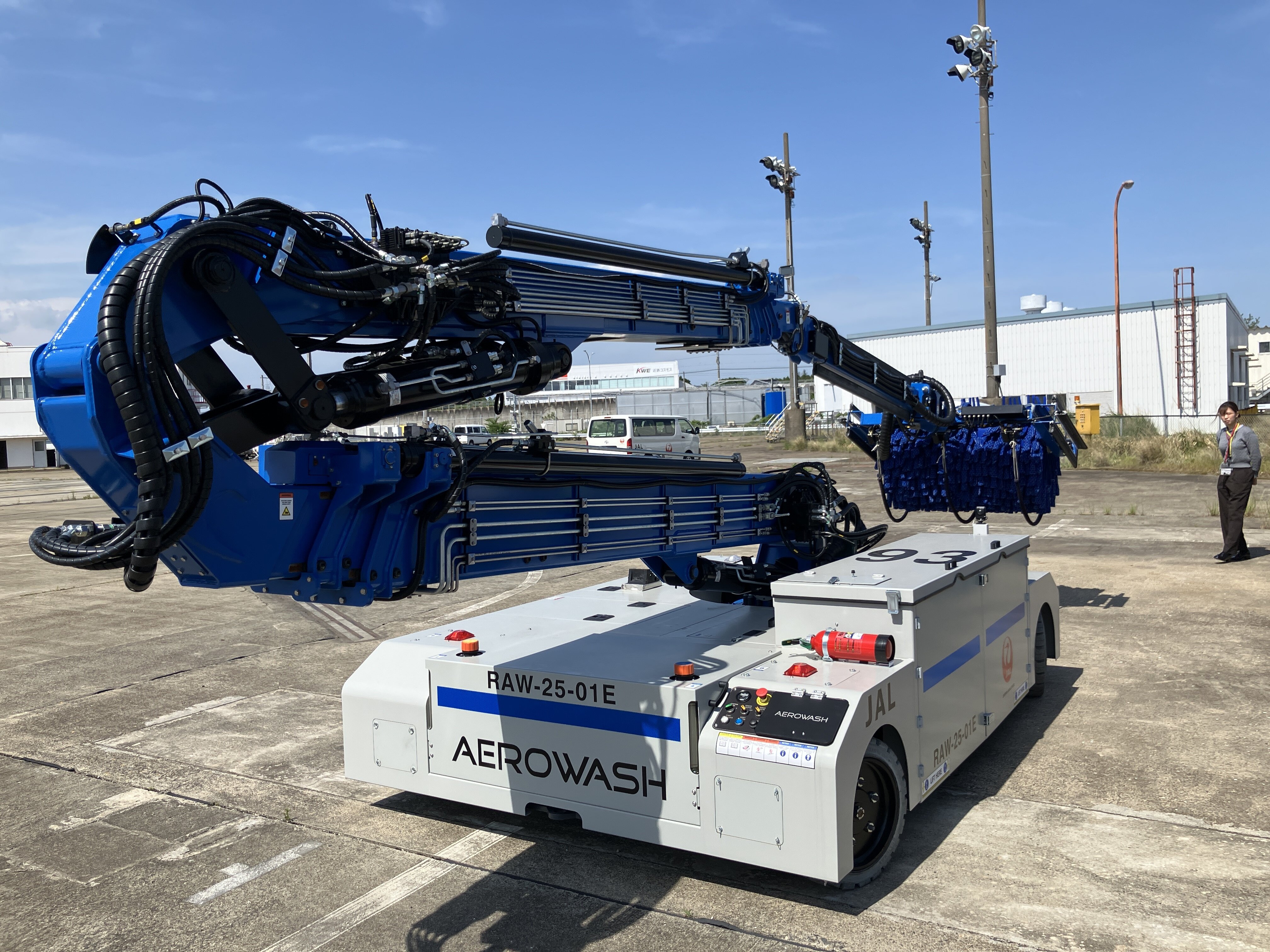
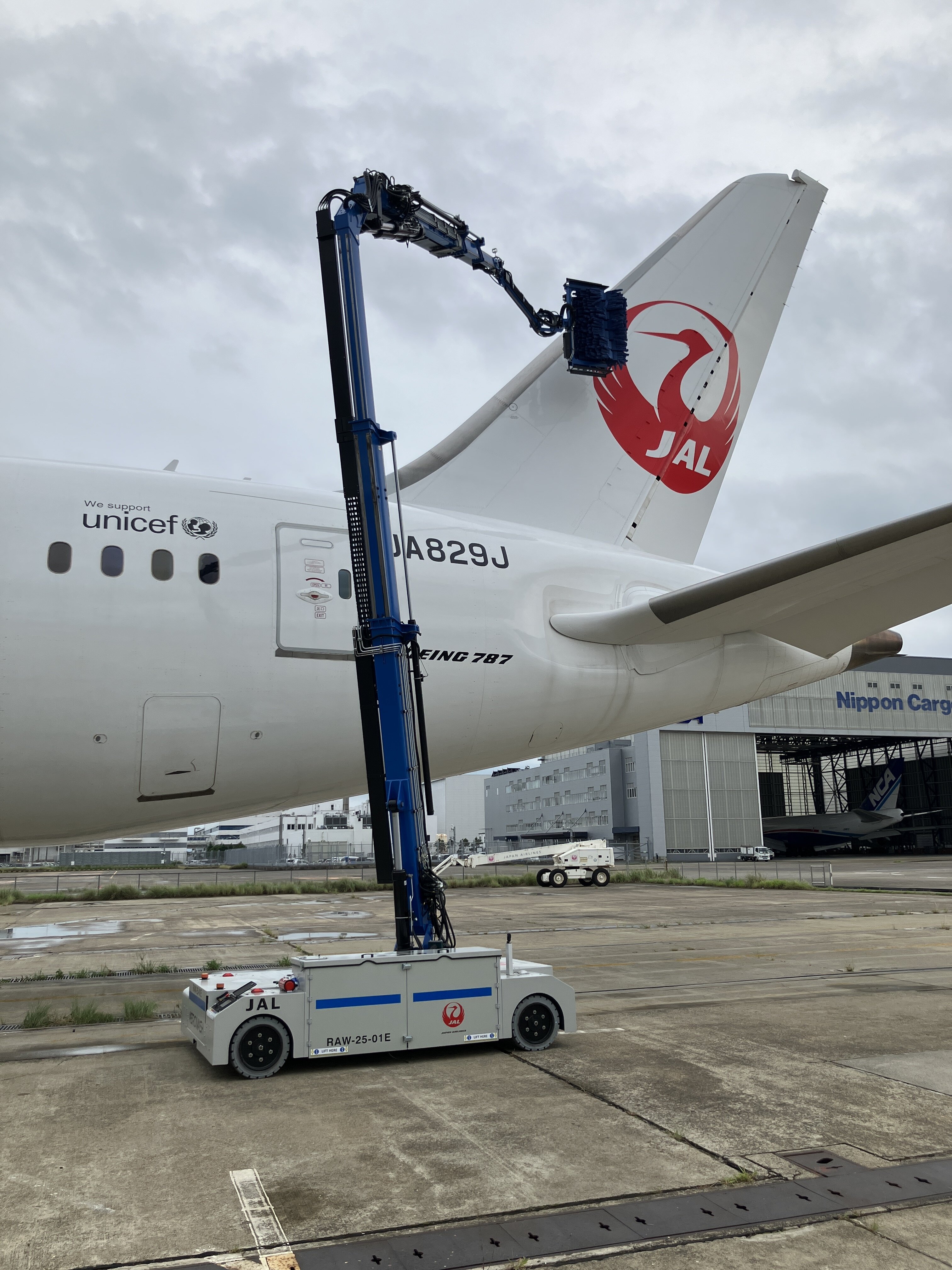
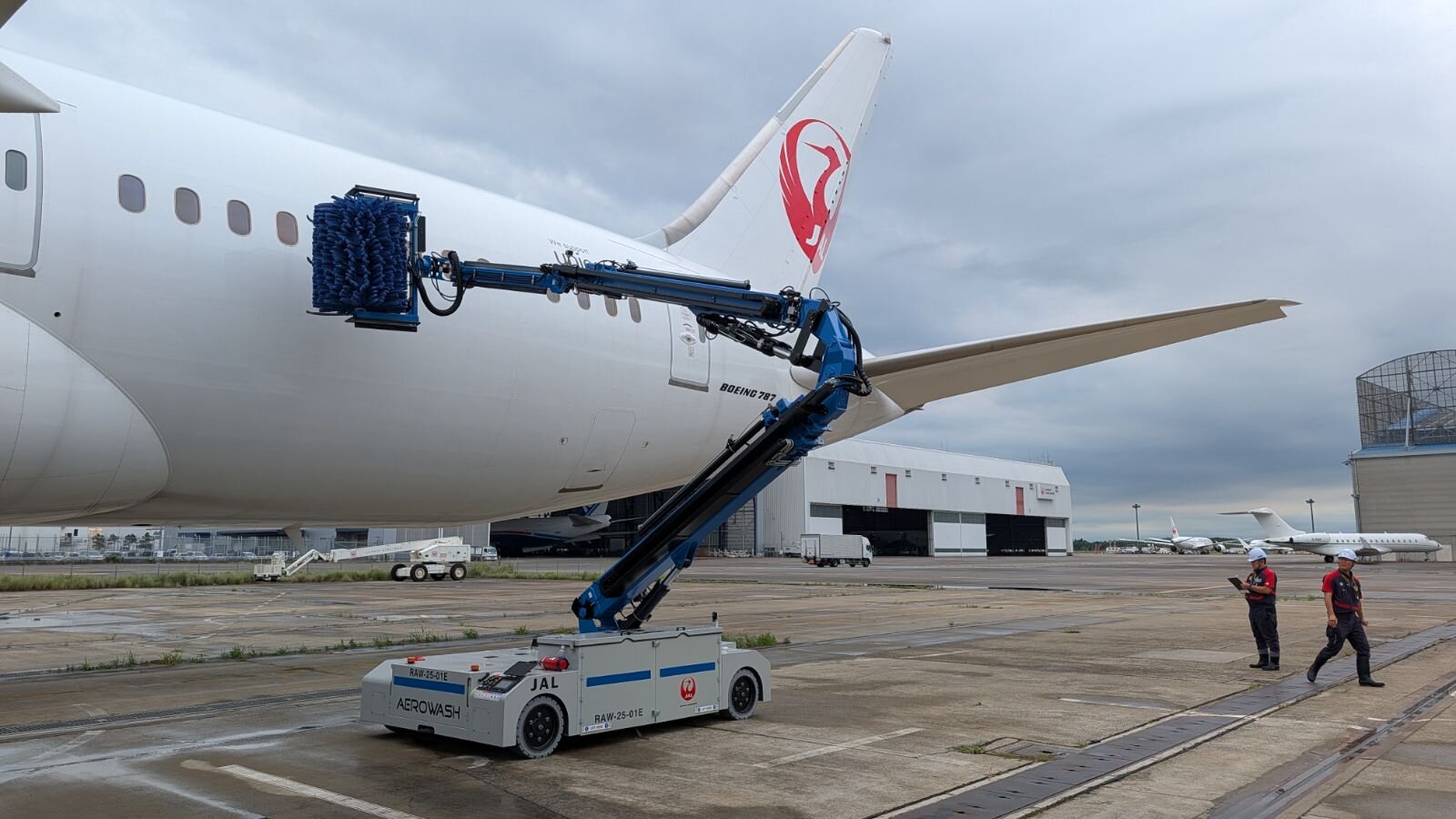
Tokyo, JAPAN ― Aligned with its strategic commitment to Airport Digital Transformation, JAL Group announces the introduction of the Aerowash Remote-Controlled Aircraft Washing Robot (AW3) at Narita Airport. This deployment marks a first for a domestic airline (*1). Following a comprehensive operational training program, full-scale implementation is scheduled for launch in 2026.

Background and History
Aircraft exterior washing is essential to maintain aerodynamic performance and uphold aesthetic standards. Historically, this labor-intensive process has been performed manually during overnight shifts by staff utilizing long-handled mops and specialized chemical agents. Three decades ago, JAL pursued efficiency gains with a wired remote-controlled washing system, but technical limitations prevented sustained operation. The newly introduced AW3 integrates state-of-the-art control technology, serving as an advanced human-machine collaborative system and marking JAL's first major challenge in program-controlled washing in three decades.

Key Features and Advancements
1. [Japan's First] Advanced Program Control & Collaborative Assistance
●Automated Arm Precision: Utilizing pre-programmed coordinates for aircraft surfaces, the robotic arm autonomously approaches designated washing areas such as main wings and tail sections.
●Human-Machine Collaboration: As the robot arm approaches the aircraft, operators perform fine-tuned manual adjustments using hand-held controls. This collaborative function balances operational precision with labor savings while upholding stringent safety standards.
●Enhanced Maneuverability: Equipped with an omnidirectional (4WS) drive system, the unit offers superior flexibility for precise positioning around the aircraft.
2. Enhancing Well-being and Workplace Reform
●Operational Efficiency: According to manufacturer specifications, this system can reduce aircraft washing time by up to 40% per aircraft compared to traditional manual methods (*2). JAL will validate these performance gains through ongoing on-site operations to continuously drive ground handling labor efficiency and productivity.
●Elevated Safety and Environment: The technology significantly mitigates physical strain associated with working at heights and heavy labor. Furthermore, it reduces direct exposure to cleaning agents, promoting improved occupational health and safety standards.
3. Commitment to Sustainability
●Resource Optimization: Significant water savings can be achieved, with potential reductions in water usage by up to 50% per aircraft (*2).
●CO2 Emission Reduction: The fully electric, battery-powered design minimizes CO2 emissions at the work site, contributing to a reduced environmental footprint.
(*1) The introduction of a "collaborative aircraft washing robot" equipped with an automatic approach function programmed for each aircraft model and multi-axis control is a first for a domestic airline (according to JAL research).
(*2) Figures are based on Aerowash catalog values.
Future Outlook
Beginning with operations at Narita Airport, JAL will explore deploying this technology at other domestic airports to improve working conditions and enhance aircraft exterior washing quality.
Through advanced technology, JAL will elevate the safety, quality, and productivity of ground handling operations, while continuing its efforts to realize a "well-being" workplace environment where each employee can work with peace of mind, as well as an environmentally friendly, "sustainable" flight operation.